
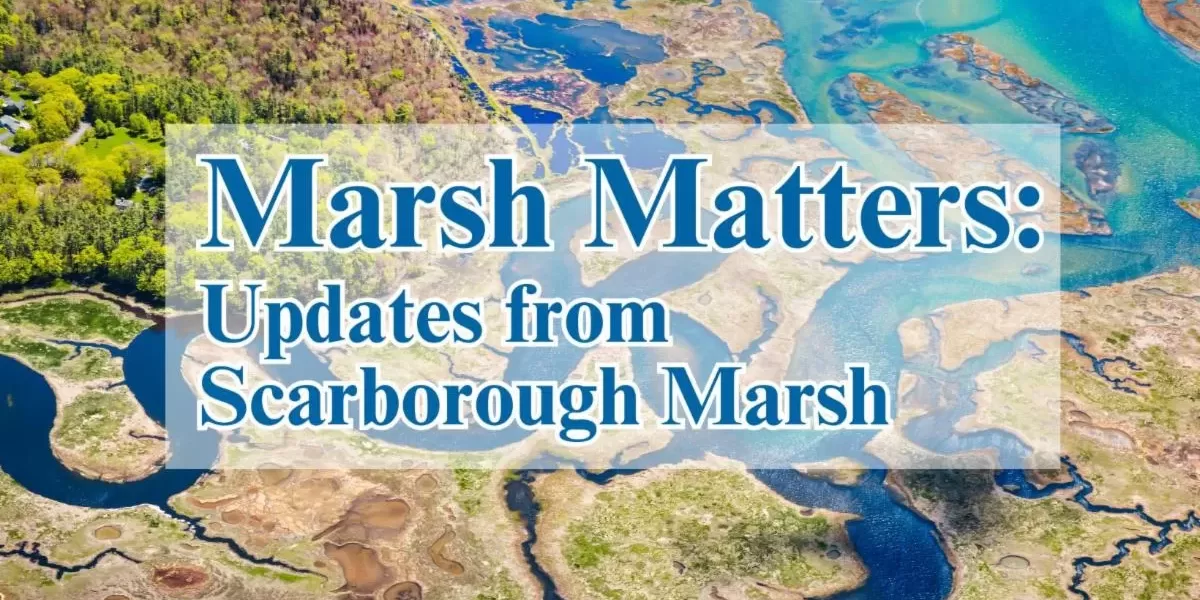
Scarborough Marsh is one of those places that instantly says Scarborough. Its sweeping grasses and winding waterways are a familiar sight to residents and a draw to visitors alike. Tidal marshes are more than a beautiful view — they are incredibly important ecosystems that help filter pollutants from water, support local fisheries, host a diverse array of wildlife, and play an important role in protecting coastal towns from flooding. They’re also a rapidly disappearing ecosystem due to threats such as invasive species, sea level rise, and other forms of habitat loss. The fact that the Town of Scarborough has Maine’s largest salt marsh stretching through its center makes residents stewards of a very special place.
Did you know that Maine’s second-most lucrative fishery is commercial shellfish harvesting, which relies on the mudflat habitats along the marsh? Even if you aren’t a clam fan, you may be indirectly benefiting from the fact that the marsh provides this kind of habitat.
The Marsh receives tens of thousands of recreational visitors a year, and they aren’t all human (check out this cute migratory visitor). Scarborough Marsh also stores a large portion of Maine’s blue carbon, a very important ecosystem service (learn more here).
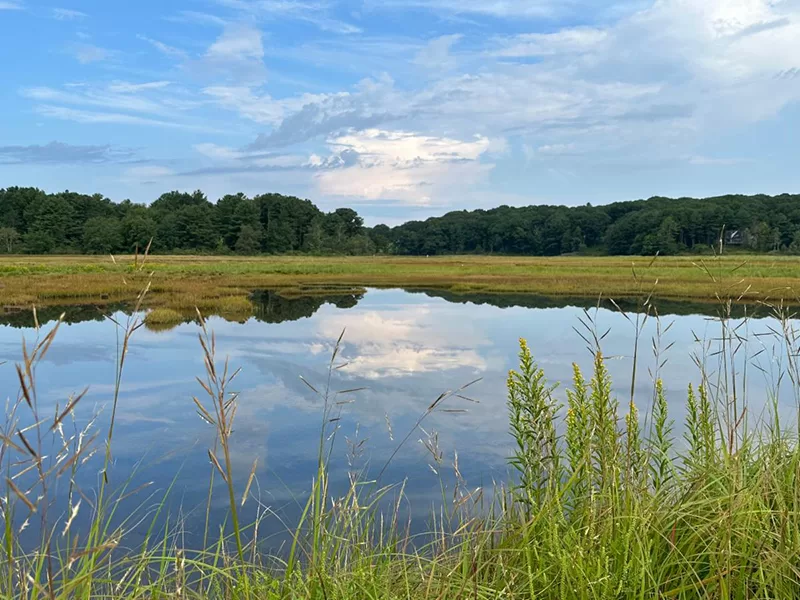
DID YOU KNOW: Blue carbon refers to carbon captured and stored by coastal ecosystems like tidal marshes, seagrasses, and mangroves. Marshes can store carbon for centuries in their waterlogged soils, making them powerful allies in the fight against climate change. Salt marshes are estimated to take carbon out of the atmosphere as much as 10x faster than tropical forests.
WE WANT YOUR THOUGHTS ON THE MARSH — the good, bad, & indifferent!
Students at the University of New England are working with SLT to gather community input on Scarborough Marsh through a 5-minute, 10-question survey.
The Big Issue: Sea Level Rise
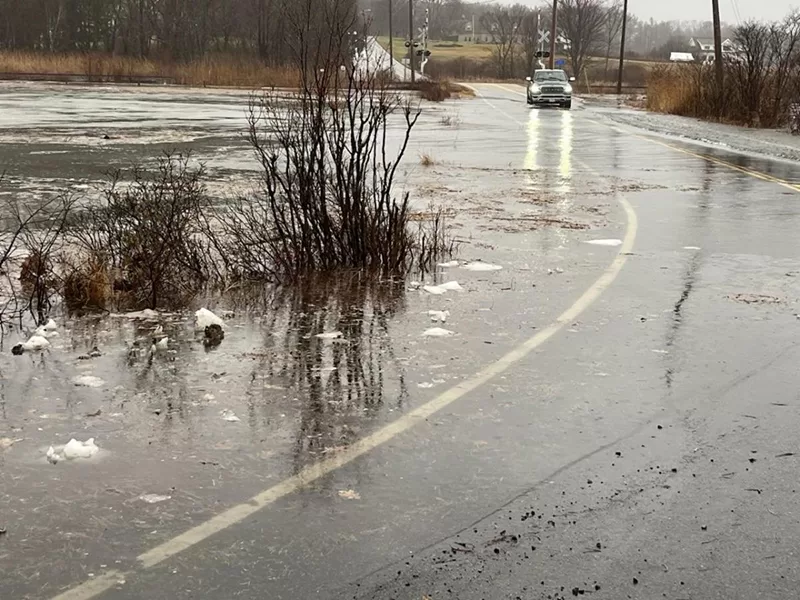
Scarborough Marsh Is Threatened by Sea Level Rise, and Restoration Is Key to Its Survival
When left undisturbed, tidal marshes sustain themselves naturally by capturing sediment and other materials when the tide comes in. This process of collecting particles and bits of dead plants and animals suspended in the water allows these ecosystems to build themselves up vertically (we call this “accretion”).
Unfortunately, the Gulf of Maine waters are warming and rising faster than over 99% of the world’s oceans. Marsh accretion rates may not be able to keep up (learn more about this here). Future sea level rise scenarios are expected to see many areas of our Marsh become so frequently inundated by the tides that the vegetation will drown, allowing sediment to wash away (see Maine’s Geological Survey Sea Level Rise Scenario viewer).
Luckily, we can increase the Marsh’s resiliency by undoing some of the human-made modifications that are affecting it now. This can help the Marsh in many ways, such as by increasing its accretion rate in some areas so it can keep up with sea level rise. Restoration steps we can take include repairing ditches, removing embankments, and widening culverts that restrict the valuable influx of sediment that the Marsh needs from the tides.
To address this, SLT has convened an interdisciplinary team of over 20 experts to plan for the Resilient Restoration of the Scarborough Marsh — a NOAA-funded, 3-year endeavor.
Water Quality Monitoring
The quality of the water entering the marsh from its tributaries affects what can survive and thrive in it. Also, clams filter water and suck up whatever pollutants get put into the marsh, prompting mudflat closures to prevent people from harvesting them when things get too nasty (see the Maine interactive shellfish closures map here).
SLT partners with the Town of Scarborough and the Maine Department of Environmental Protection to monitor important water quality metrics such as bacteria levels (yes, the kind found in mammal poop) to understand where water quality may be a problem, so we can locate and mitigate pollution issues to keep the ecosystem healthy.
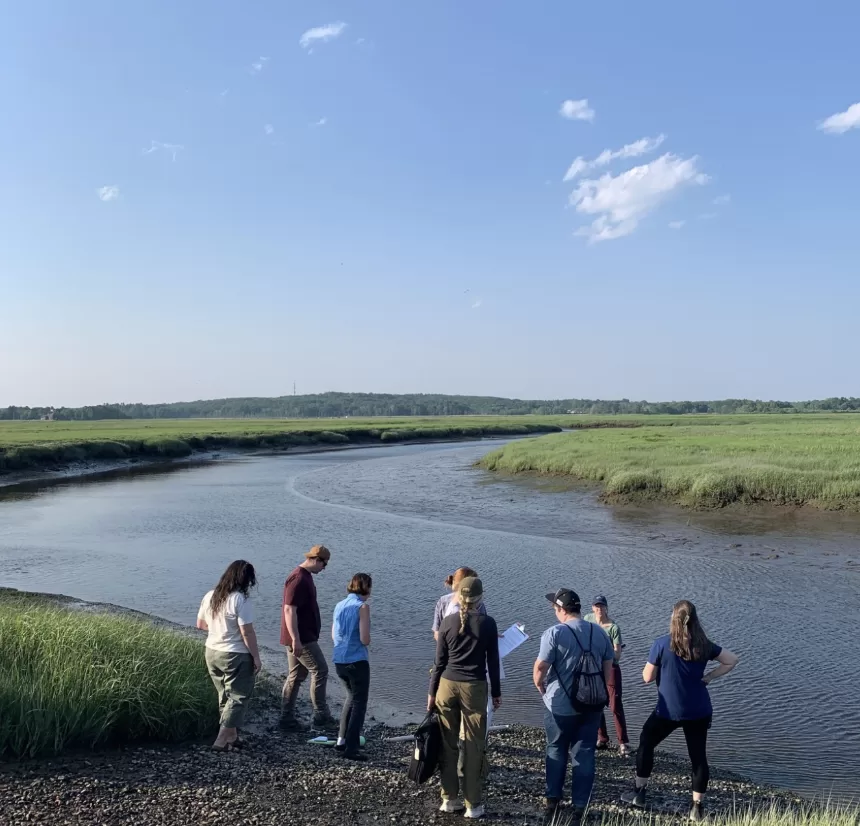
A big part of this is a volunteer-based program, so please reach out to Therese Lamperty if you’re interested!
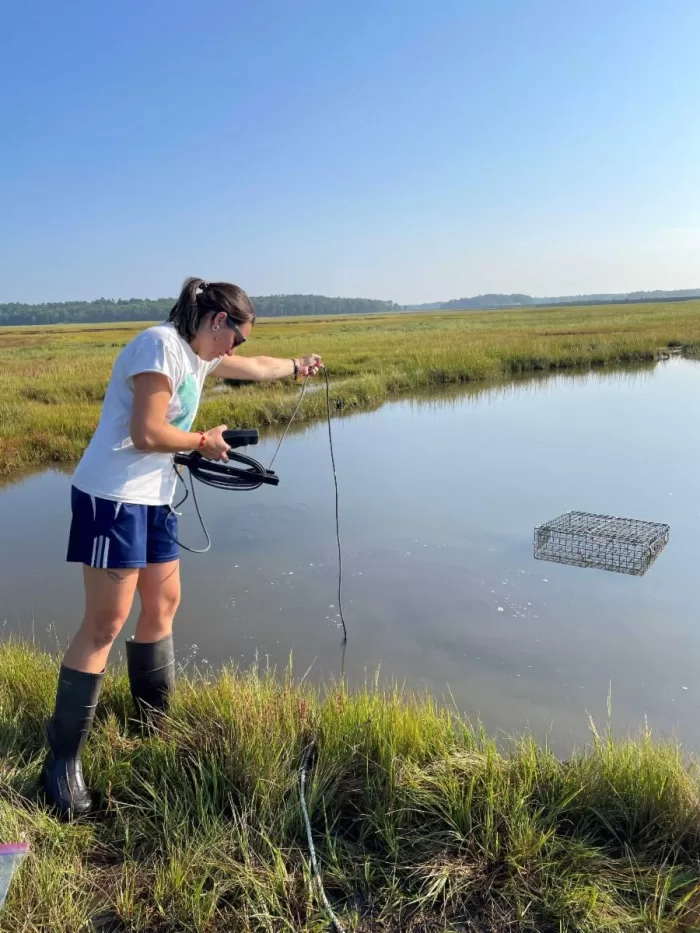
Blue Crab Watch
As the Gulf of Maine waters warm, blue crabs are expanding their range northward. Scientists aren’t certain how blue crabs — which eat basically whatever they can fit down their gullet — will impact other species in the ecosystem (such as lobsters). Blue crabs spend part of their lives in saltmarshes, so Dr. Steve Jury, an Associate Professor in the Sciences Department at St. Joseph’s College, and his students have partnered with SLT to monitor Scarborough Marsh for blue crabs. Interestingly, the low temperatures of this winter and last winter seem to correspond with a regional disappearance of the blue crabs, which had been steadily on the rise (as summarized by this 2023 article). We have zero blue crab sightings in the Marsh to report from last summer’s monitoring efforts. Given ocean temperature trends, we expect they will be showing up in the future. If you’re interested in learning more and helping to monitor blue crabs in the marsh this summer, email Therese Lamperty to learn more!
Student Spotlight
University of New England seniors Erik Swenson and Liberty (“Libby”) Crow are working to help us better understand how the Scarborough Marsh is changing over time. The students are working with guidance from Dr. Will Kotchtitzky, Assistant Professor, School of Marine and Environmental Programs, and SLT’s Marsh Scientist and Restoration Director Dr. Therese Lamperty, to leverage historical satellite imagery in combination with current drone imagery. They are focusing specifically on assessing how the Scarborough Marsh’s vegetation cover (an important health metric), elevation, and size have changed over time. Their results will help us see where the Marsh is most at risk of disappearing as sea levels rise. At the end of the spring 2026 semester, Erik and Libby will be presenting their results. Stay tuned for more information!
- Become a volunteer Water Quality Monitor (May–November) or Blue Crab Trap Monitor (summer)! To learn more, email Therese Lamperty.
- Share your thoughts on the marsh by taking this five-minute survey put together by student partners at the University of New England.
- Join the SLT–Maine Audubon Marsh Cleanup Day — April 25, 9am–12pm (92 Pine Point Road, Maine Audubon Marsh Visitor Center).
- Save the Date: Saturday, August 15 — SLT’s inaugural Scarborough Marsh Day! We’re planning a full day of marsh-themed activities, learning, and fun for all ages. Stay tuned for more details.
Help Protect the Future of Scarborough Marsh
From monitoring water quality to planning large-scale restoration, the work of understanding and protecting the marsh takes time, expertise, and community support.
Scarborough Land Trust is helping lead research, coordinate scientists, and work with partners to ensure this extraordinary ecosystem remains healthy for generations to come.
Please consider making a gift today.
Your support helps us:
- Advance marsh restoration planning
- Support research and scientific monitoring
- Improve water quality and protect habitat
- Keep this landscape resilient in the face of rising seas