

Scarborough Land Trust is launching a multi-year initiative to restore the Scarborough Marsh, strengthening its ecological health, safeguarding nearby roads and infrastructure, and improving the Marsh’s resilience to sea level rise and climate change. With funding from NOAA, SLT is bringing together a team of interdisciplinary scientists and engineers to guide the planning process.
Why Restoration is Needed
The Scarborough Marsh is one of Maine’s most important coastal ecosystems, representing approximately 15% of the state’s total marshland. At 3,200 acres, it is the largest contiguous salt marsh system in Maine and provides essential habitat for a wide range of species, including threatened and endangered wildlife such as the salt marsh sparrow.
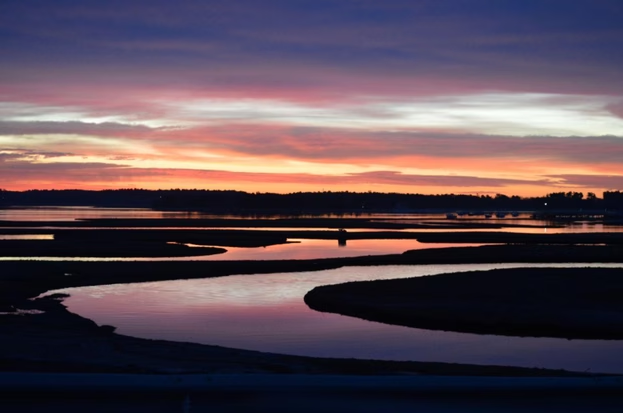
Furthermore, the Marsh stores significant amounts of carbon and filters pollution out of the water, making it a Maine Focus Area of Statewide Ecological Significance. Beyond its ecological value, the Scarborough Marsh is a vital resource for people throughout Maine. The Marsh supports recreation and outdoor experiences that help Mainers connect with nature, while also holding cultural and historical significance for Wabanaki Indigenous Peoples in southern Maine.
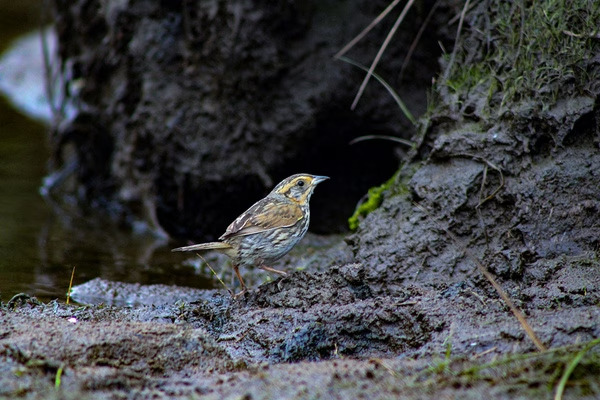
Salt Marsh Sparrow
Source: Ducks Unlimited
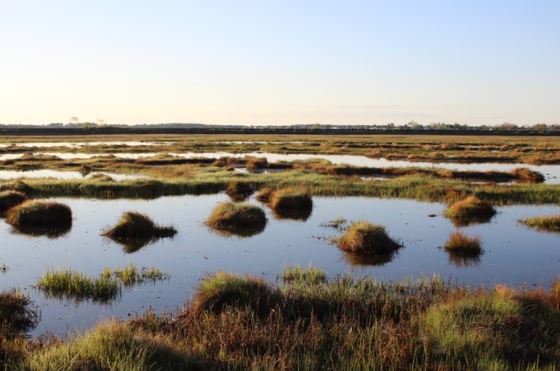
However, decades of agricultural practices, such as hay farming, and poor management practices have disrupted the Marsh’s natural functions. Namely, they have altered the Marsh’s hydrology by creating ditches and draining areas, and disrupting the tidal channels that once allowed water to move naturally through the system. These changes contributed to the formation of large megapools, or areas of standing water, that alter marsh chemistry by increasing sulfide levels, reducing soil carbon density, and limiting plant growth.
Most importantly, these pools cause subsidence, or reductions in elevation, that leave the Marsh vulnerable to sea level rise. Restoring natural water flow and reducing these megapools is essential to rebuilding a healthy, functioning salt marsh.
Climate change further increases the urgency for restoration. As sea levels rise, coastal marshes will need to migrate inland in order to survive, but preparation is necessary to ensure that the Scarborough Marsh can adapt. With just one foot of sea level rise, the Marsh could transition from its current high marsh-dominated system to a low marsh ecosystem, significantly changing available habitat. With two feet of sea level rise, much of the Marsh could disappear entirely. Restoring natural processes and protecting surrounding areas now will help the Marsh remain resilient in the face of future changes.
The need for restoration is especially urgent as development pressures continue to grow. Scarborough is one of the fastest growing communities in the Greater Portland region, with a population growth rate of 17.7% between 2010 and 2020—more than double the national average. Increasing development threatens the surrounding habitats and open spaces that allow the Marsh to expand and adapt over time. Thus, it is more important now than ever to do the work that will help ensure this irreplaceable ecosystem continues to support Maine’s wildlife, communities, and coastal future.
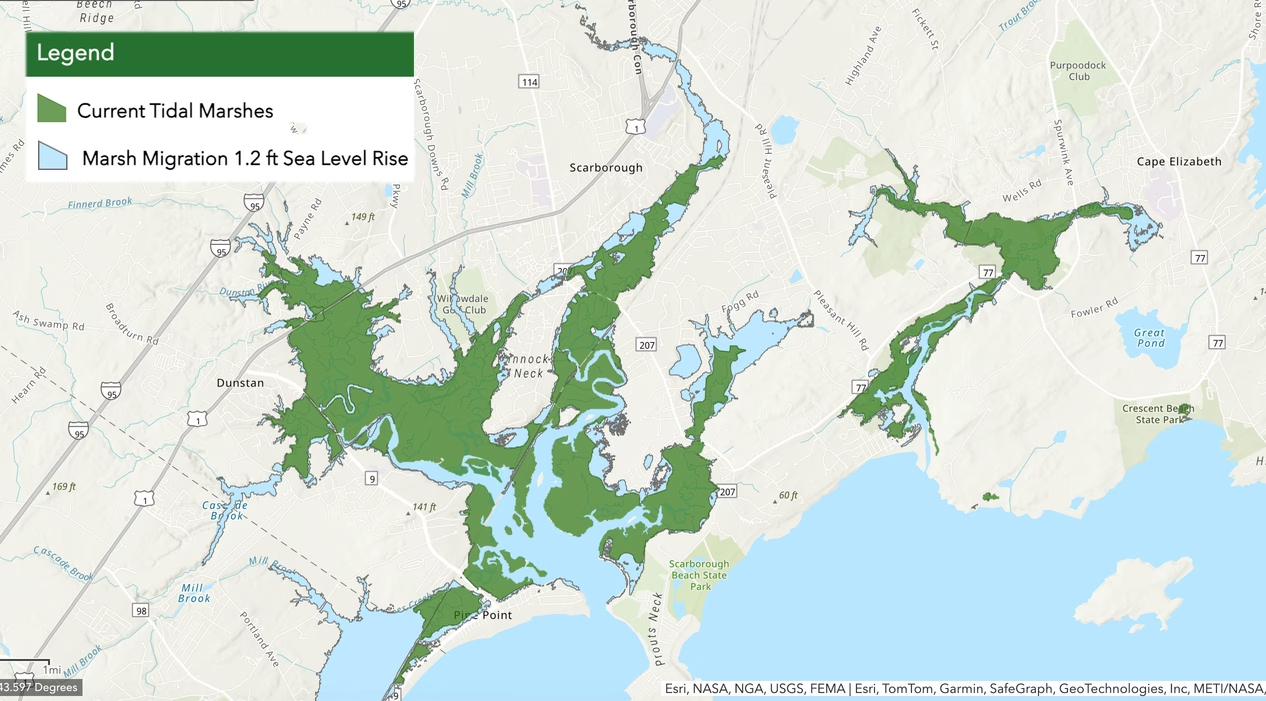
Projected marsh migration by 2040 with 1.2 feet of sea level rise. Without intervention, some areas of the marsh could be lost entirely.
Source: Maine Department of Agriculture, Conservation and Forestry.
Explore other sea level rise scenarios, including the 3.9 feet that the State of Maine is planning for by 2100.
Scarborough Land Trust’s Role
Scarborough Land Trust brings nearly 50 years of land conservation, acquisition, and advocacy experience to the stewardship and restoration of the Scarborough Marsh. For decades, SLT has worked to protect the Marsh and surrounding lands. Through ownership of several public access preserves adjacent to the Marsh, SLT has developed extensive knowledge of the area and its connection to the broader coastal ecosystem.
SLT’s commitment to the Marsh has been strengthened through its merger with the Friends of Scarborough Marsh, bringing together additional funding, expertise, board leadership, volunteers, and community support. This collaboration builds on the knowledge of individuals deeply connected to the Marsh, including our Executive Director, Andrew Mackie and SLT board member and former Friends of Scarborough Marsh president Steve Pinette, both of whom bring extensive experience in conservation and restoration efforts.
Moving forward, SLT aims to support restoration efforts by ensuring that future decisions—particularly around road infrastructure —are guided by the most current marsh science and best management practices. SLT will advocate for restoration projects that improve public access, protect areas where the Marsh can migrate as sea levels rise, and strengthen the long-term resilience of this critical ecosystem.
A key part of SLT’s role is also connecting people with the Marsh. Through our close connection with the community and education initiatives, SLT hopes to help more community members— especially those who may have limited access to nature and coastal ecosystems— understand the importance of the Marsh and become involved in protecting its future.
Our Vision for Restoration
SLT’s restoration approach focuses on identifying impaired areas of the Scarborough Marsh and using targeted, low-impact techniques to restore natural processes, protect high marsh habitat, and improve the Marsh’s ability to adapt to sea level rise. Restoration efforts will prioritize improving water flow, reducing areas of standing water, and strengthening the Marsh’s natural defenses against climate change. In the process, these actions will also help reduce flooding impacts on nearby private property and infrastructure by improving stormwater movement within the Marsh system. We anticipate the planning process will unfold over the next 3–4 years, with the goal of beginning implementation in summer 2028.
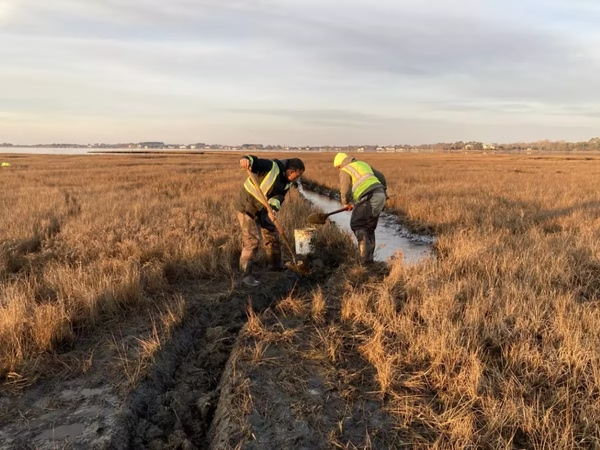
Digging a runnel in a salt marsh
Source: Katherine Stahl /USFWS, Public Domain
Restoration will rely on several proven techniques designed to bring the Marsh closer to its natural state. Ditch plug removal, which involves the removal or alteration of man-made barriers that trap water, will restore natural water flow and encourage the return of healthy bank vegetation. Runnels, or shallow interconnected channels, will be dug to allow trapped water to drain with the tides, helping marsh plants receive the periodic exposure to air they need to survive. These channels can often be constructed using hand tools such as shovels and spades, making them a low-cost, low-impact restoration method. Improved tidal exchange will support plant growth, increase sediment capture, and help elevate the marsh surface over time, making it more resilient to sea level rise.
Another key strategy is microtopography, which involves strategically placing sediment to create areas of higher elevation within the Marsh. Sediment generated during runnel creation and ditch modifications can be reused to build these elevated areas. Together, these techniques will help restore healthy marsh functions and protect the marsh for years to come.
Successful restoration will require collaboration across the community. SLT will work to build a multi-stakeholder partnership that brings together local experts, community members, the Town of Scarborough, the Maine Department of Transportation, conservation organizations, and other partners. By coordinating future planning—especially around transportation infrastructure— we can ensure decisions are guided by current marsh science. These partnerships will also ensure that all members of the community, including those with limited access to nature and coastal ecosystems, have opportunities to understand and engage with the restoration process.