
Healthy waterways are essential to healthy ecosystems and communities. Through the Maine Department of Environmental Protection’s Volunteer River Monitoring Program, Scarborough Land Trust works with dedicated volunteers to monitor local water quality, helping protect the rivers, marshes, and coastal habitats that make Scarborough beautiful.
Since 2019, Scarborough Land Trust has been collecting water quality data as part of the Maine Department of Environmental Protection’s (MDEP) Volunteer River Monitoring Program (VRMP). Through VRMP, volunteer groups across Maine collect water quality measurements several times a month to ensure waterways meet the standards established under the 1972 Clean Water Act. The program began in 2009 to standardize water quality monitoring, and as of 2025, 12 organizations—including SLT—have participated.
During each sampling trip, SLT measures five key indicators of water health: dissolved oxygen, temperature, salinity, specific conductance, and bacterial presence. Dissolved oxygen measures the amount of oxygen available for aquatic organisms to breathe. Healthy oxygen levels are essential for fish and other aquatic life, while low levels can stunt growth or even cause die-offs. Oxygen enters waterways through the atmosphere and photosynthesis but can be depleted by decomposition, algae growth, respiration, and runoff. The optimal level is > 7 milligrams/liter of water. Water temperature is another critical factor. Many aquatic species rely on a narrow temperature range to survive, and changes caused by runoff, vegetation loss, or other disturbances can increase stress and vulnerability to disease.
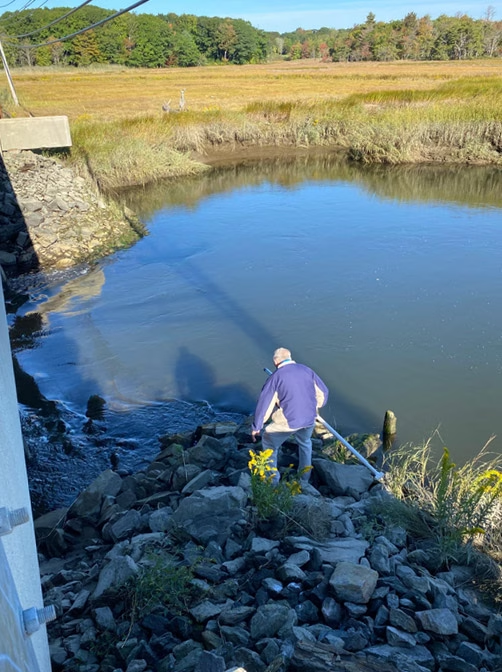
A volunteer navigates rocks to take a water sample off Black Point Road
SLT also measures salinity, which tracks the amount of dissolved salt in the water and can reveal changes in climate conditions, rainfall patterns, and tidal influences. Furthermore, specific conductance indicates how easily water carries an electrical current, which helps identify the presence of dissolved ions and in turn, potential pollution. Levels greater than 100 s/cm indicate a pollution problem. Finally, SLT partners with a local lab, SGS Scarborough, to test for enterococcus bacteria, an indicator of sewage pollution that can signal the presence of harmful pathogens. Our
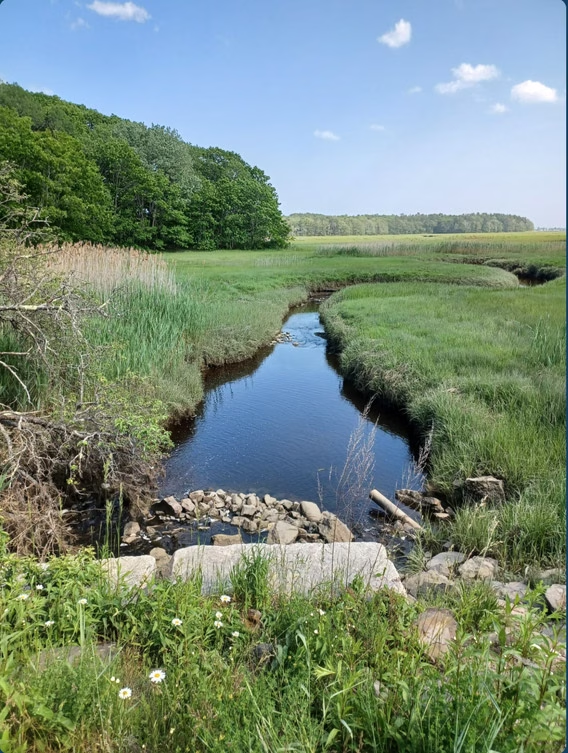
One of the culverts where SLT volunteers collect water quality samples
After sampling, our data is sent to the MDEP, where it helps determine which waterways may need additional attention. You can explore past results and learn more about the program through the Maine VRMP Storyboard or Maine VRMP Dashboard.
In Scarborough, the MDEP selects monitoring sites that represent seven rivers flowing into the Bay and Marsh—two highly vulnerable habitats where water quality plays a critical role. Oftentimes, these sites are located at culverts where water flows continuously and can be accessed by volunteers.
Our sampling team includes 10 volunteers and three SLT staff members. We divide into small groups to monitor 10 sites throughout town. At each location, we use YSI probes to collect water quality measurements and small vials to gather samples for bacterial testing. While the process may sound simple, reaching the water isn’t always easy. Some sites are located along busy roads like Route One, while others require creative solutions to safely reach the water. Occasionally, this means using fishing pole-like tools to extend our reach. Rain or shine, our volunteers navigate slippery rocks and other challenging conditions to collect this important data. Despite the occasional challenge, the volunteer program has been a meaningful way for us to connect with the Scarborough community and contribute directly to protecting the health of Maine’s waterways. A map of all sample sites across Scarborough.
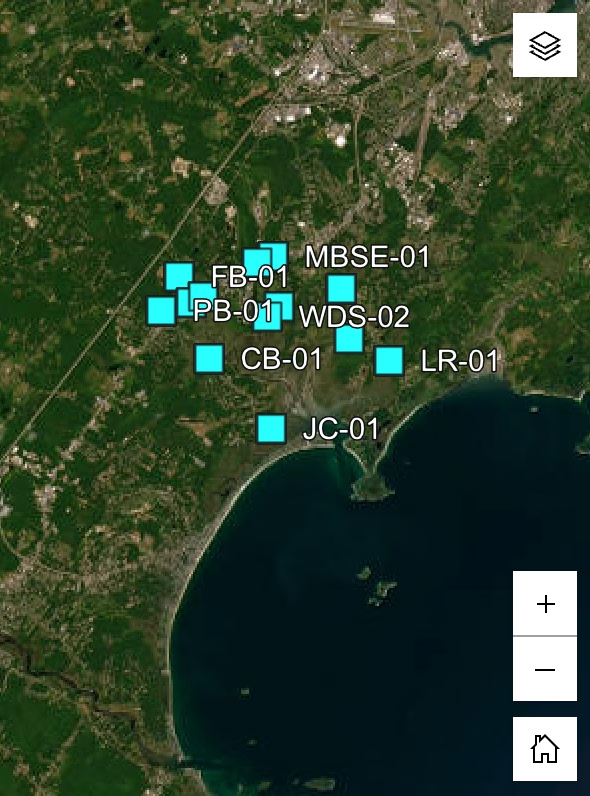
A map of all sample sites across Scarborough
If you’d like to join our team of volunteers, contact Therese Lamperty using our contact form.